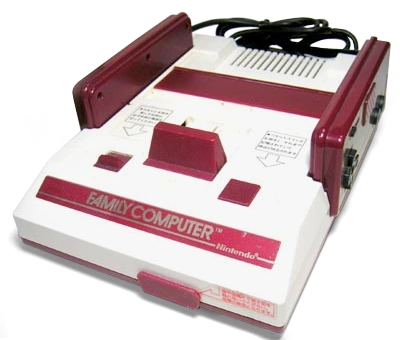
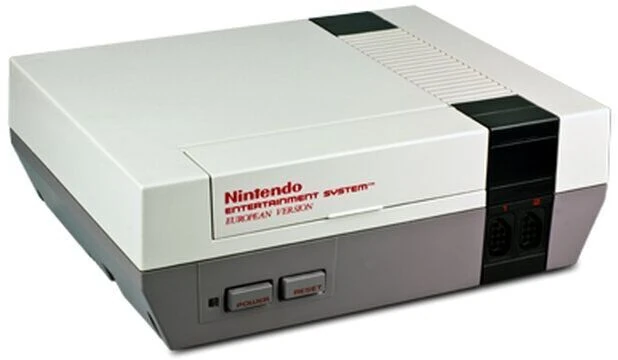
The Nintendo Entertainment System, commonly abbreviated as NES or informally 'Nintendo', was an 8-bit cartridge-based console released by Nintendo in October 1985. The Japanese version of the console, released two years prior in 1983, is called the Family Computer (FC) or Famicom, which has a completely different appearance from the North American/European machine despite having the same main hardware. Although it is the first home console by Nintendo to be released internationally with great success, contrary to popular belief, the NES is not the first system ever to be manufactured by multi-billiondollar company, as the Color TV-Game series - a Japan-only Pong clone, predates it in 1977.
One of the most important consoles ever created and part of the 8-bit era, the Nintendo Entertainment System competed against the Sega Master System, Atari 7800, and for a brief period the latter's predecessor Atari 2600 (which was a generation prior). Despite having rather basic hardware by current standards, the NES is by far the most successful console of its age; It's widely known for introducing many groundbreaking Nintendo franchises such as Super Mario, Metroid, and of course The Legend of Zelda, alongside Capcom's Mega Man and so forth. In addition, the Nintendo Entertainment System is also responsible for reviving the video game industry in North America following the infamous video game crash of 1983 in spite of the previous success of the Atari 2600 and establishing the dominance of Japanese video game manufacturing. Its library is known for having ports of arcades such as Donkey Kong and, notoriously, highly challenging games such as Ninja Gaiden, Ghosts 'n Goblins, Contra, Super Mario Bros. The Lost Levels (a FDS title), and even Zelda II: The Adventure of Link, leading to what older fans called such games "Nintendo Hard" and making the NES a very skeptical pick for casual gamers in spite of its popularity and some even claimed it doesn't age well today or is overrated, unlike its successors.
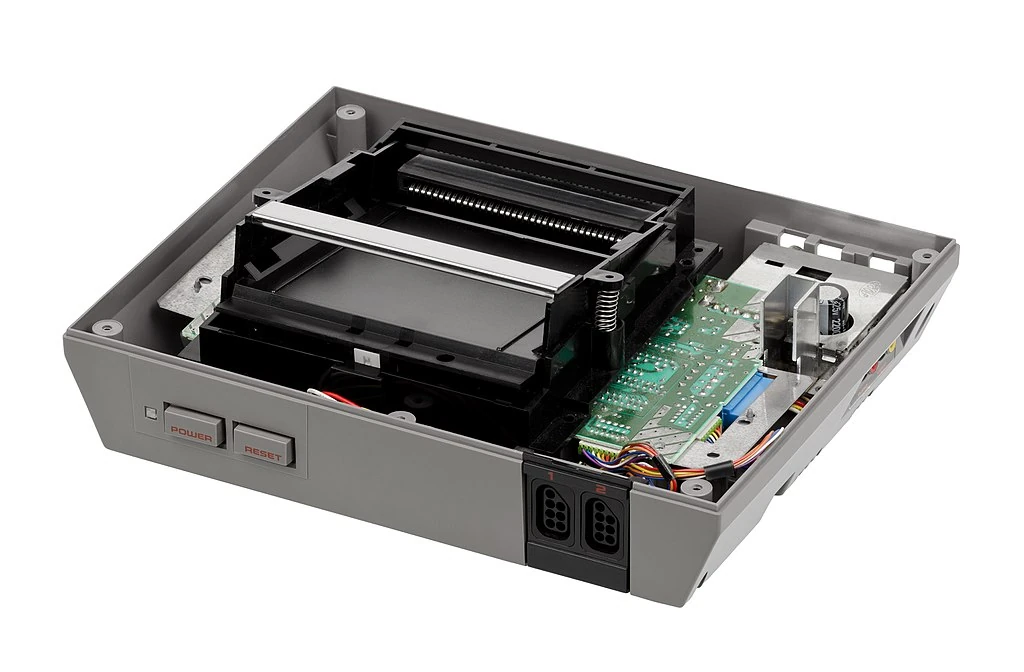
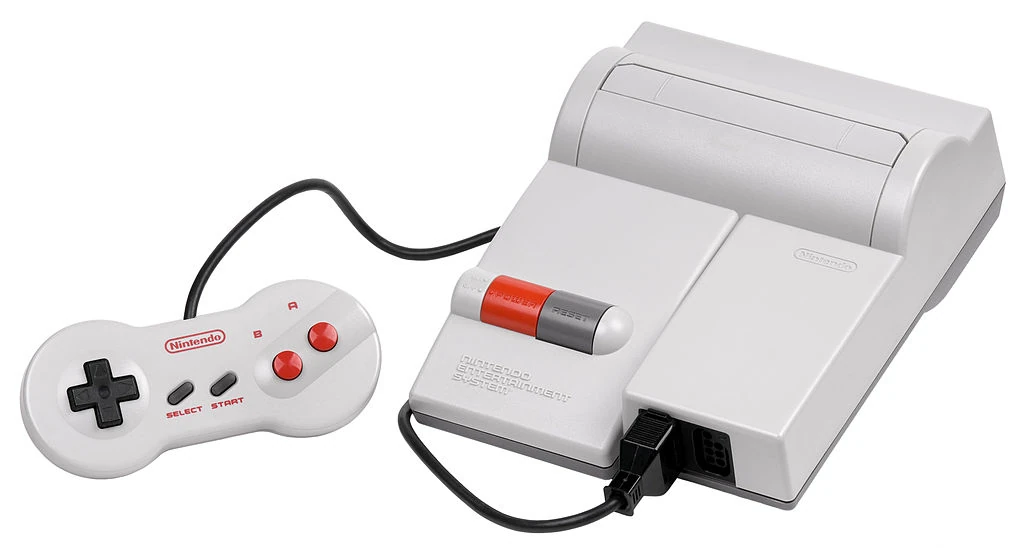
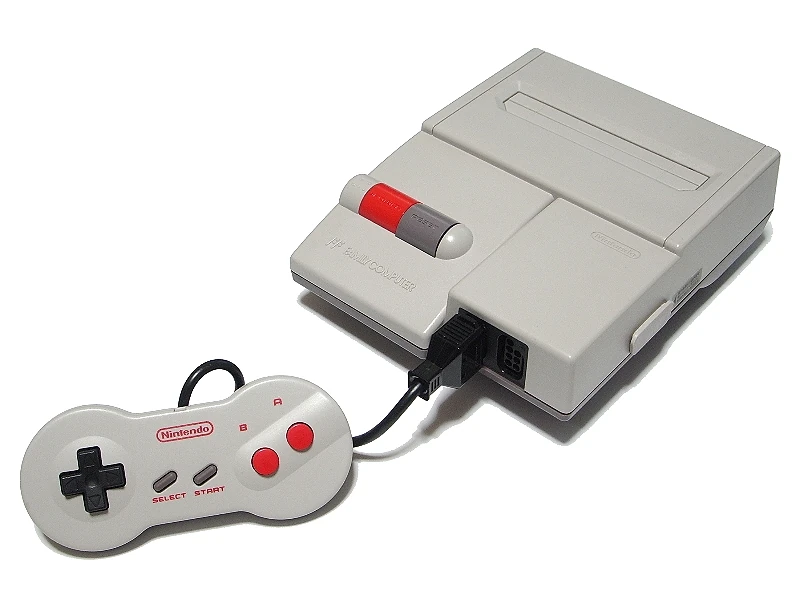
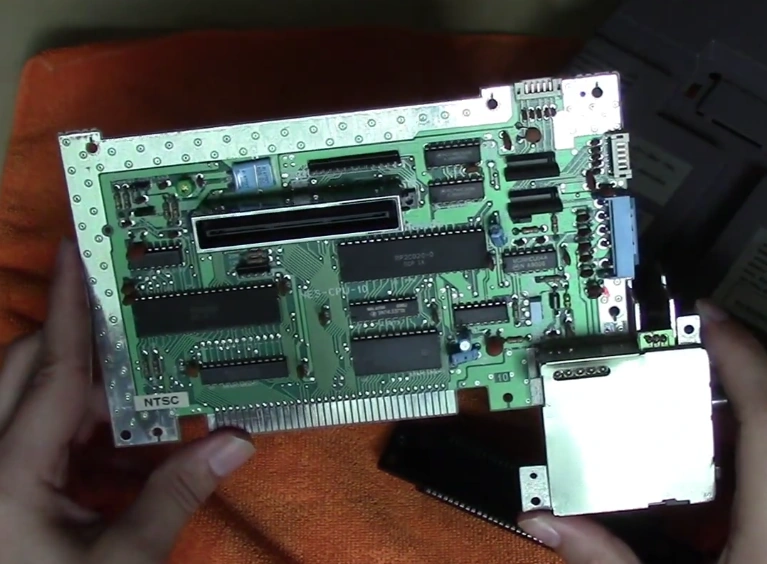
This console, unlike other cartridge-based systems, uses a unique VCR-like mechanism to load its games rather than on the top of the console like the Famicom (or the SNES and N64), though this design, alongside its infamous 10NES chip on the motherboard, in recent years, although innovative, is known to have a major flaw of easily catching dirt and bending the pin contact points of the unit and game cartridges, causing the NES to have trouble reading games and difficult to preserve the system itself. This would lead to a compact, top-loading cost-reduced variant late in the console's lifespan in 1993 by Nintendo called the New-Style NES or NES-101 (or "NES Jr". by fans) to resolve this problem. The Japanese version of it is called New Famicom. The redesign did not make it to Europe, however.
The NES sold 61.91 million units worldwide and was discontinued in 1995. However, Japan would continue the support of the Famicom until 2003, twenty years after its release, making itself the longest-lasting home console (excluding the Sega Master System in Brazil).
The Nintendo Entertainment System was succeeded by the Super Nintendo Entertainment System in 1990.
Like other classic Nintendo consoles, some NES games have been re-released multiple times by Nintendo via official emulation such as Virtual Console or Nintendo Switch Online.
NES Classic Edition
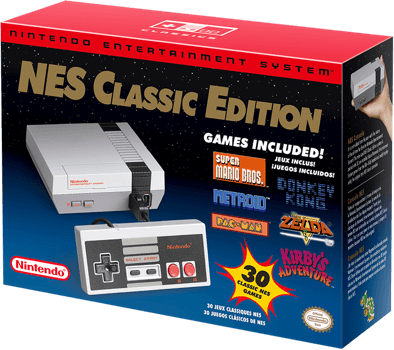
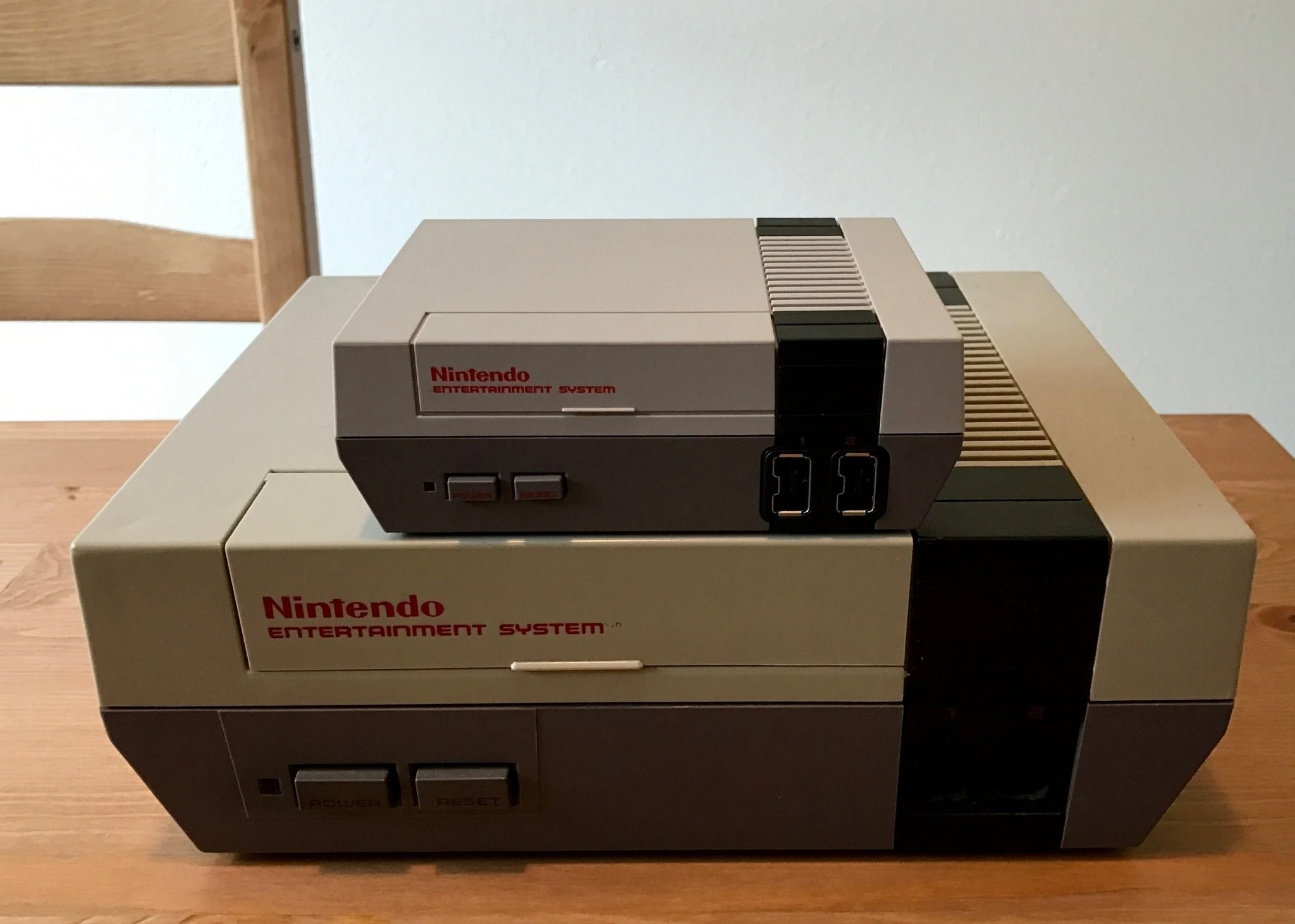
The NES Classic Edition is a smaller, limited-edition emulated-based version of the Nintendo Entertainment System released in 2016 that does not accept cartridges. Due to popular demand and illegal scalpers, it has quickly sold out upon release. This also applies to its successor, the Super NES Classic Edition.
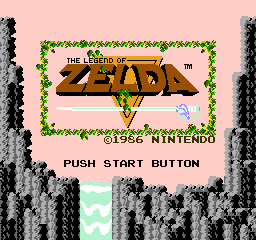
Instead, it comes with thirty pre-installed games, The Legend of Zelda and The Adventure of Link among them.
The Legend of Zelda games
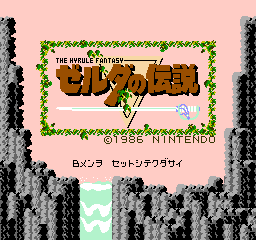
- The Legend of Zelda (Family Computer Disk System launch title in 1986; released internationally on cartridge in 1987 and re-released in Japan in the same format in 1994)
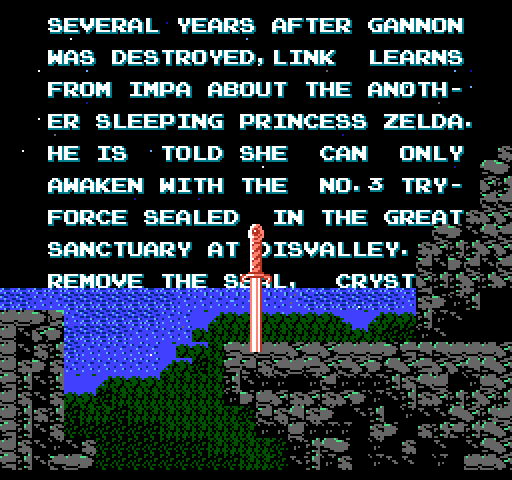
- The Adventure of Link (released on Famicom Disk System in Japan in 1987; cartridge internationally the following year)
Trivia
- The slogan of the NES is "Now you're playing with power!".
- The Nintendo Entertainment System, specifically the Famicom Disk System add-on exclusively for Japan, is the original console for the The Legend of Zelda series.
- The Famicom/NES had a library of over 1,000 games.
- The NES' most commonly purchased bundle during initial release, the Deluxe Set, has its original retail price in 1985 of $179.99, which is the equivalent of $543.32 as of 2025.
- The original launch titles of the Famicom are Donkey Kong, Donkey Kong Jr. and Popeye. For the international release, this has expanded to 17 games, including Super Mario Bros., Ice Climber, Duck Hunt, Excitebike, and more.
- Many of the concepts of the NES by Nintendo were reused for the GB and SNES in official advertisements to this day.
- The Game Boy which was released in 1989, in spite of being technically part of the 16-bit era like the Super NES, was originally intended to be the handheld version of the NES.
- Super Mario Bros. released on the NES for the Mario series is often considered among the video game community to be the single most important title in history.
- The NES' Japanese counterpart, the Famicom, is the longest system to have repair support by its manufacturer, as Nintendo stopped in 2007 after the company no longer have the necessary parts to replace broken units. Coincidentally, this also applied to the SNES as well.

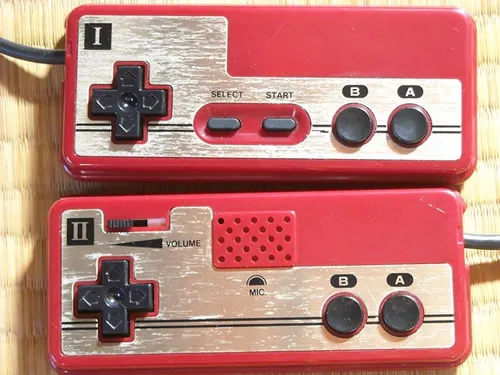
The Famicom's controllers, which the one for the second player on the bottom has a unique feature for The Legend of Zelda
- The original Famicom model is known to have its unique controllers hardwired to the console, making it quite difficult to replace defective units. Interestingly, its 2P controller has a microphone (at the deletion of Start/Select buttons), which can be used to easily defeat enemies in The Legend of Zelda vulnerable to noise, specifically the Pols Voice. However, the international NES and later redesigned models for both regions lack such a feature in their controllers (therefore Link must use Arrows or his Sword instead to quickly destroy Pol Voices).
- The Nintendo Entertainment System as a whole arguably has the highest level of nostalgia among fans of older game consoles by Nintendo - possibly even more so than the Super NES and Nintendo 64, as many often try to collect every single title of its library today like its aforementioned successors in spite of decades of age and ever-increasing rarity. As a result, most of its popular games in the secondhand market are often sold at very high prices and one title - none other than Super Mario Bros., was sold for a record-breaking $660,000 at an auction in 2021. Ironically enough, the previous holder was Super Mario Bros. 3 for $156,000 in 2020.
- Expectedly, as with most other classic consoles, certain games are targets of scams, as in one case in 2019, Pawn Stars attempted to sell a test-sealed copy of Super Mario Bros. for $1 million.
- The two Zelda games released on the NES, The Legend of Zelda and The Adventure of Link, are the system's 6th and 8th best-selling games, respectively, with 6.5 and 4.38 million sold. For comparison, its highest seller, Super Mario Bros., sold a whopping 40 million (though it is a pack-in title for the North American and European regions).
- The NES has a color palette of 64 colors but only 12 or 13 are used at a time for sprites and backgrounds, respectively. Because of these limitations, the graphics appear rather basic, and some objects even share the same palette. For example, in The Legend of Zelda, Princess Zelda's dress, the hilt of the Sword, and the Merchant shares the same color as Link's tunic. Later cartridge consoles also have this issue but not to the same degree, as they are more technologically advanced.

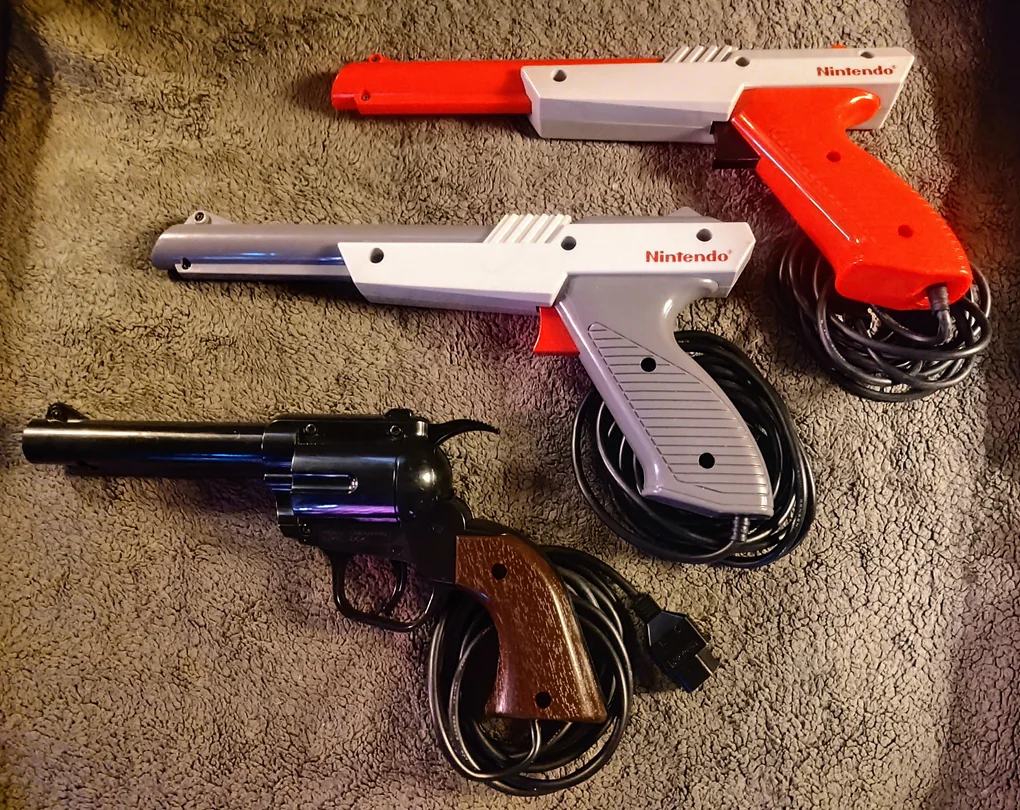
The three versions of the Zapper (left to right: Famicom, original NES, revised NES)
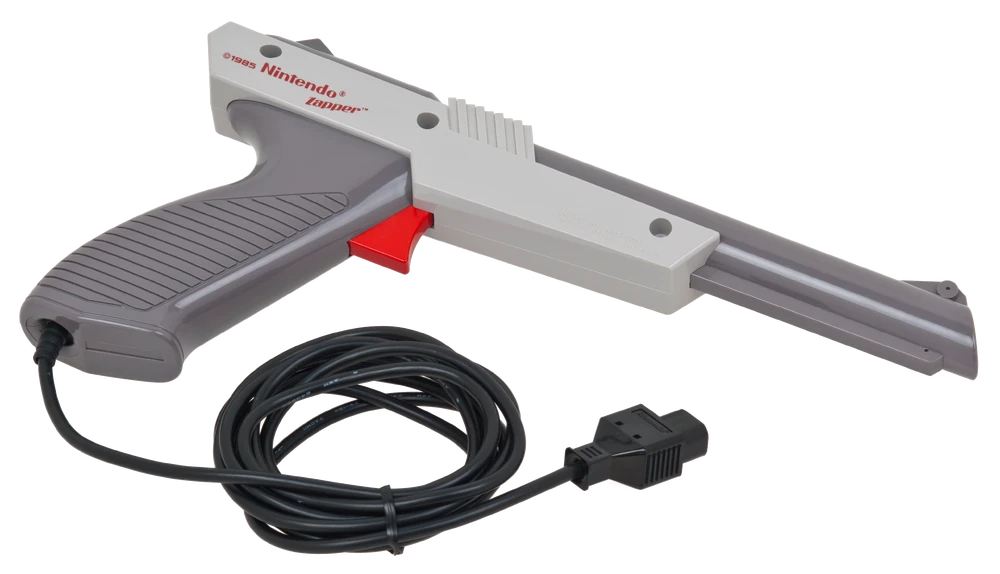
- The NES Zapper, the accessory used for light gun-based games such as Duck Hunt or Wild Gunman (which were revolutionary for the time), was initially gray, but was later changed to bright orange in 1989 due to federal toy gun laws concerning itself resembling an actual firearm. Ironically, the original version released in 1984 for Japan explicitly resembles a Colt Single Action Army revolver - a weapon commonly used in the late 1800s and fitting for Wild Gunman's setting, making it dangerous to carry around in public areas without others knowing it's a controller (similarly to airguns).
- As with other light gun accessories by Nintendo such as the Super Scope for the Super NES, the Zapper cannot be used for modern HD televisions, as the special controllers themselves are specifically designed for older CRTs. This is because when the Zapper's trigger is pressed, the game causes the entire screen to become black for one frame. Then, on the next frame, all valid targets that are on screen are drawn all white as the rest of the screen remains black. The Zapper detects this change in light level and determines if any of the targets are in its hit zone. Flat-screen displays unfortunately have display lag and would not keep up, making light gun-based games become unplayable.
- In 2023, a man in South Carolina within the United States entered a convenience store using a gray Zapper painted black before being arrested for robbery.
- Although the PAL version of the NES appears identical to its NTSC counterpart released in North America, a subtle difference is seen on the cartridge door cover, with itself saying "European version" or PAL version" below the console's name logo.
- The second logo of the Famicom is known as Famicom Family, or "FF".
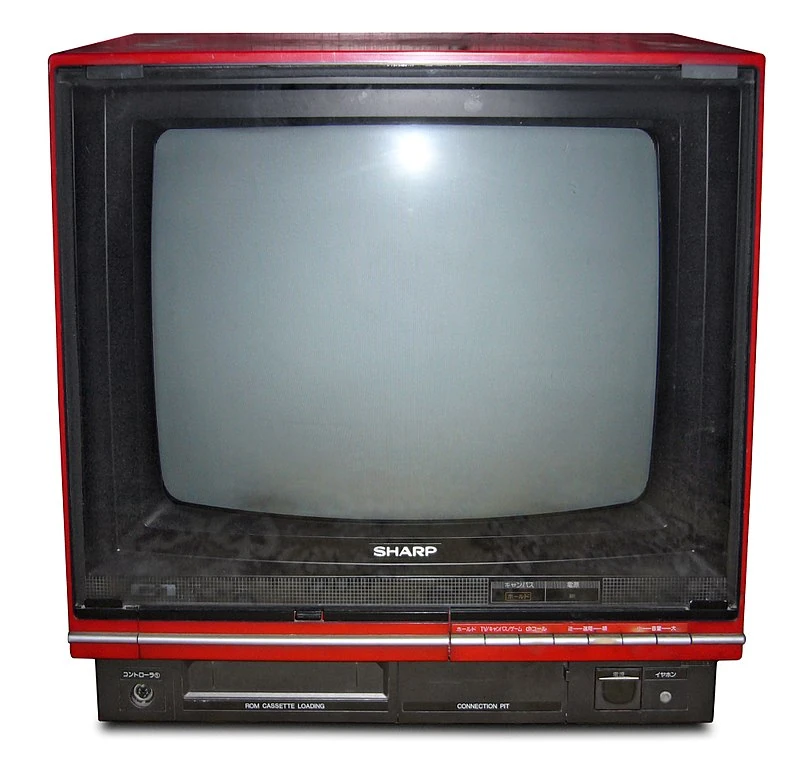
- The Famicom during its release and eventually the NES in 1989 have a TV counterpart made by Sharp, called My Computer TV or Sharp Nintendo Television. Officially licensed by Nintendo, it is a 14 or 19-inch CRT with built-in hardware of the console, making owners play the games with just the television alone and has higher image quality than the standard procedure. However, they are quite expensive and rare when new, and are extremely difficult to repair today due to the combined obsolete hardware of a CRT TV and FC/NES.
- The Super NES would also have its own called the Super Famicom Naizou SF1 (or SF1 SNES TV) in 1990, though it was exclusive to Japan.
- The intro music from the Family Computer Disk System is reused for the menu theme of the Nintendo GameCube (though played very slowly).
- The Famicom's discontinuation shares the same date as the Super NES, Game Boy, Nintendo 64, and Game Boy Color, each in 2003.
Nomenclature
 Names in Other Regions Names in Other Regions 
| |||
|---|---|---|---|
| Language | Name | Meaning | |
 |
Japanese | ファミコン (Famikon) ファミリーコンピュータ ディスクシステム (Famirī Konpyūta Disuku Shisutemu) |
Famicom Family Computer Disk System |
 |
German | Nintendo Entertainment System | |
Gallery
-
 The logo of the Nintendo Entertainment System
 -
 The logo of the Japanese Family Computer (Famicom)
 -
 Alternate logo of the Japanese Family Computer (Famicom)
 -
 The Famicom, the Japanese version of the NES
 -
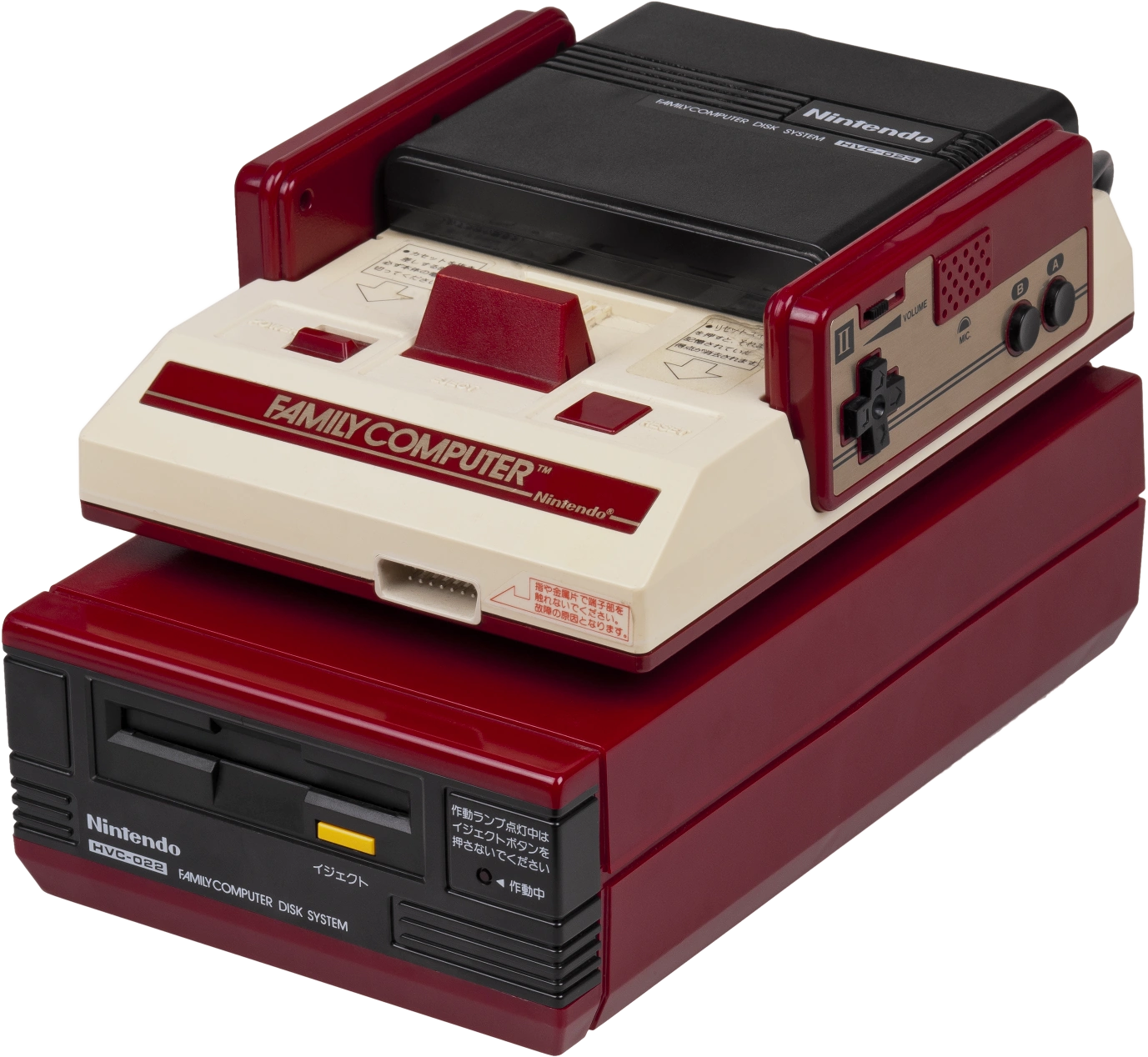
 The Famicom Disk System, an add-on for the Famicom
 -
 The European (PAL) version of the NES
 -
 The NES with its top half removed, showing its VCR-like cartridge mechanism
 -
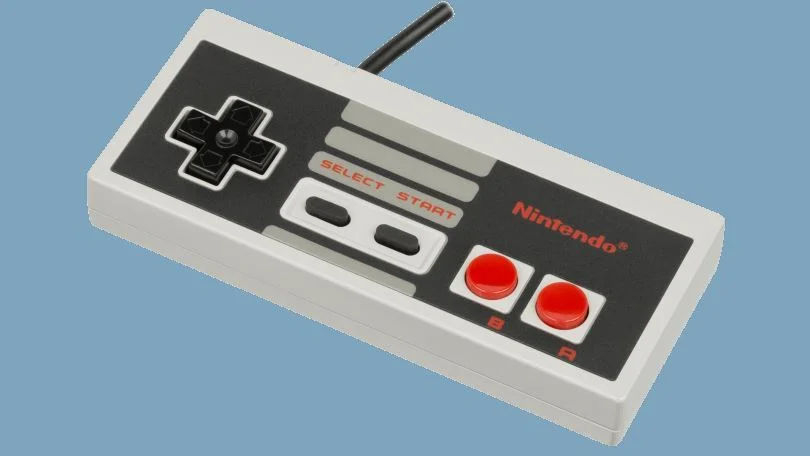
 The NES controller
 -
 The NES Zapper, an accessory used for light gun games
 -
 The New-Style NES (US late compact model)
 -
 The New Famicom (Japanese late compact model)
 -
 The Japanese version of the Sharp NES TV
 -
 An artwork of Mario and Luigi playing the NES
 -
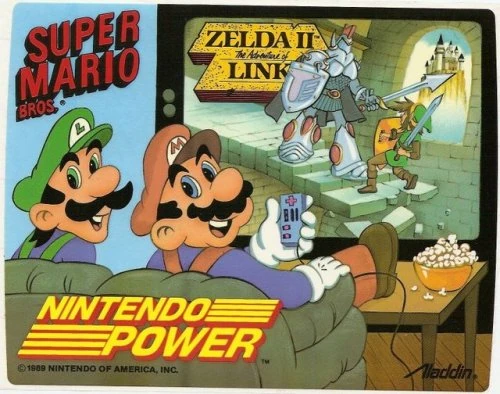
 Nintendo Power ad of the Mario Bros seemingly playing The Adventure of Link on the NES
 -
 The Action Set bundle box, featuring the orange NES Zapper
 -
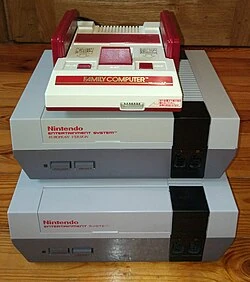
 All regional versions of the NES stacked together, showing the size difference of the Famicom (top to bottom: JP Family Computer, PAL NES, and NA NES)
 -
 An original NES (bottom) compared to the NES Classic Edition (top)
 -
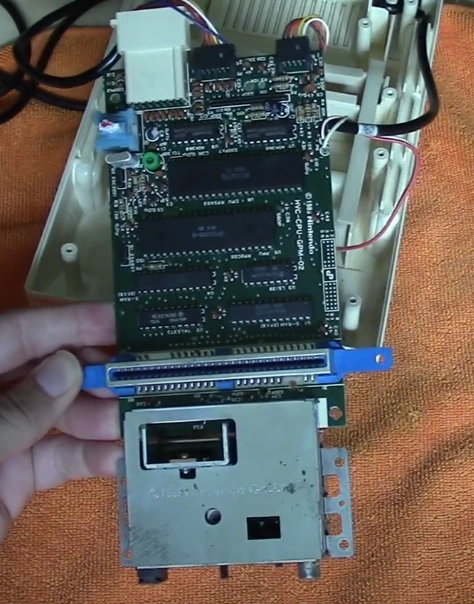
 The Famicom's motherboard
 -
 The NES' motherboard
 -
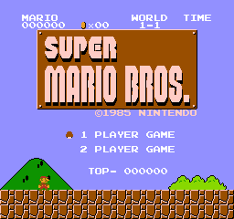
 Super Mario Bros., the NES' most iconic game and breakthrough 2D Mario title
 -
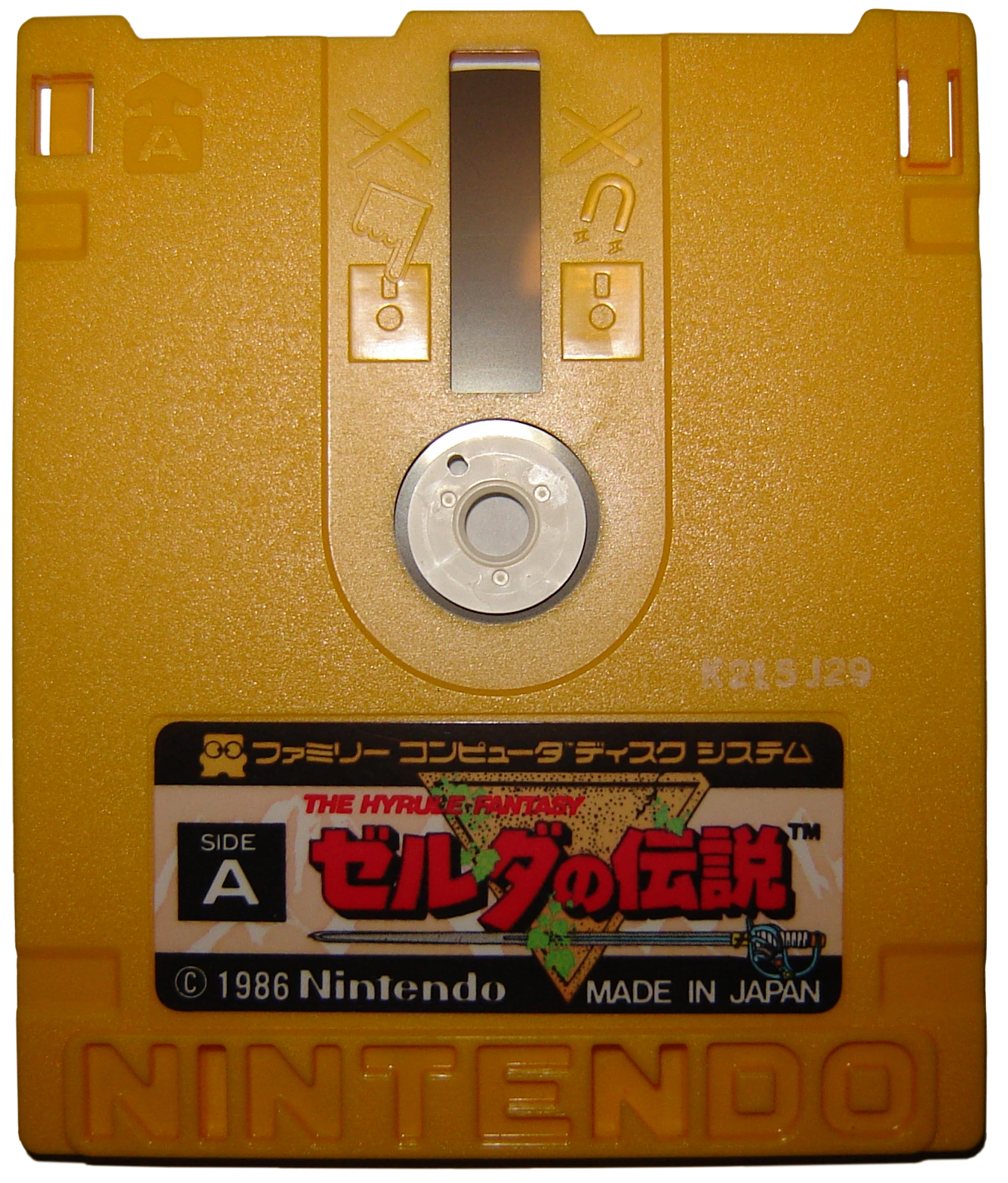
 The Zelda no Densetsu FDS Disk Card
 -
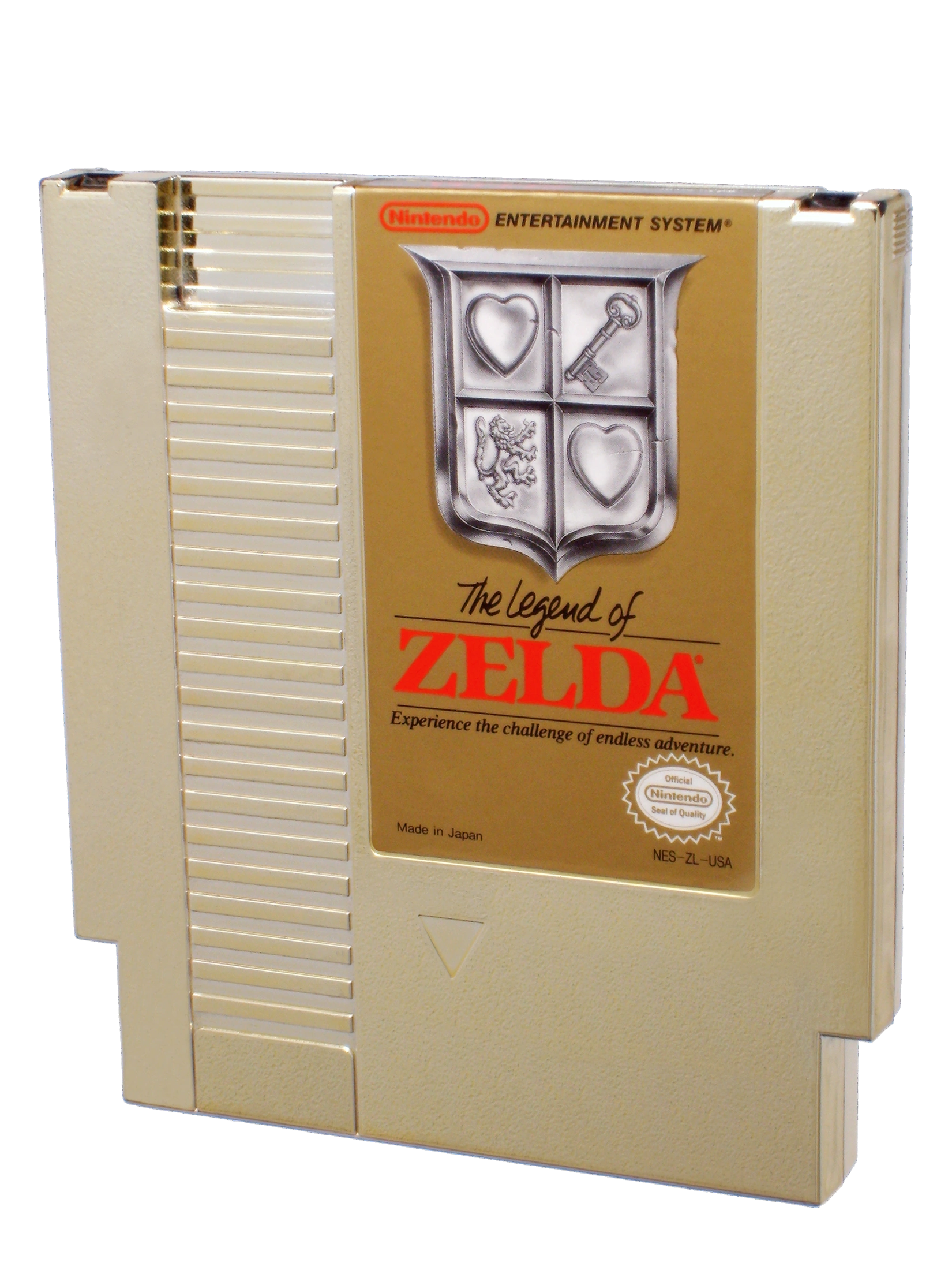
 The Legend of Zelda gold NES cartridge
 -
 The Legend of Zelda, the first Zelda game released on the NES
 -
 Japanese Famicom Disk title screen of The Legend of Zelda
 -
 The Adventure of Link, the second Zelda game released on the NES
 -

-
 Luigi as he appears on the NES (SMB)
 -
 Princess Peach as she appears on the NES (SMB)
 -
 Bowser as he appears on the NES (SMB)
 -
 Link as he appears on the NES (TLoZ)
 -
 Princess Zelda as she appears on the NES (TLoZ)
 -
 Ganon as he appears on the NES (TLoZ)
 -
 Dark Link as he appears on the NES (TAoL)
 -
 The Bow as it appears on the NES
 -
 The Bomb as it appears on the NES
 -
 The Boomerang as it appears on the NES
 -
 The Magical Sword as it appears on the NES (TLoZ)
 -
 The Magical Shield as it appears on the NES (TLoZ)
 -
 The Silver Arrow as it appears on the NES
 -
 The Triforce as it appears on the NES (TLoZ)